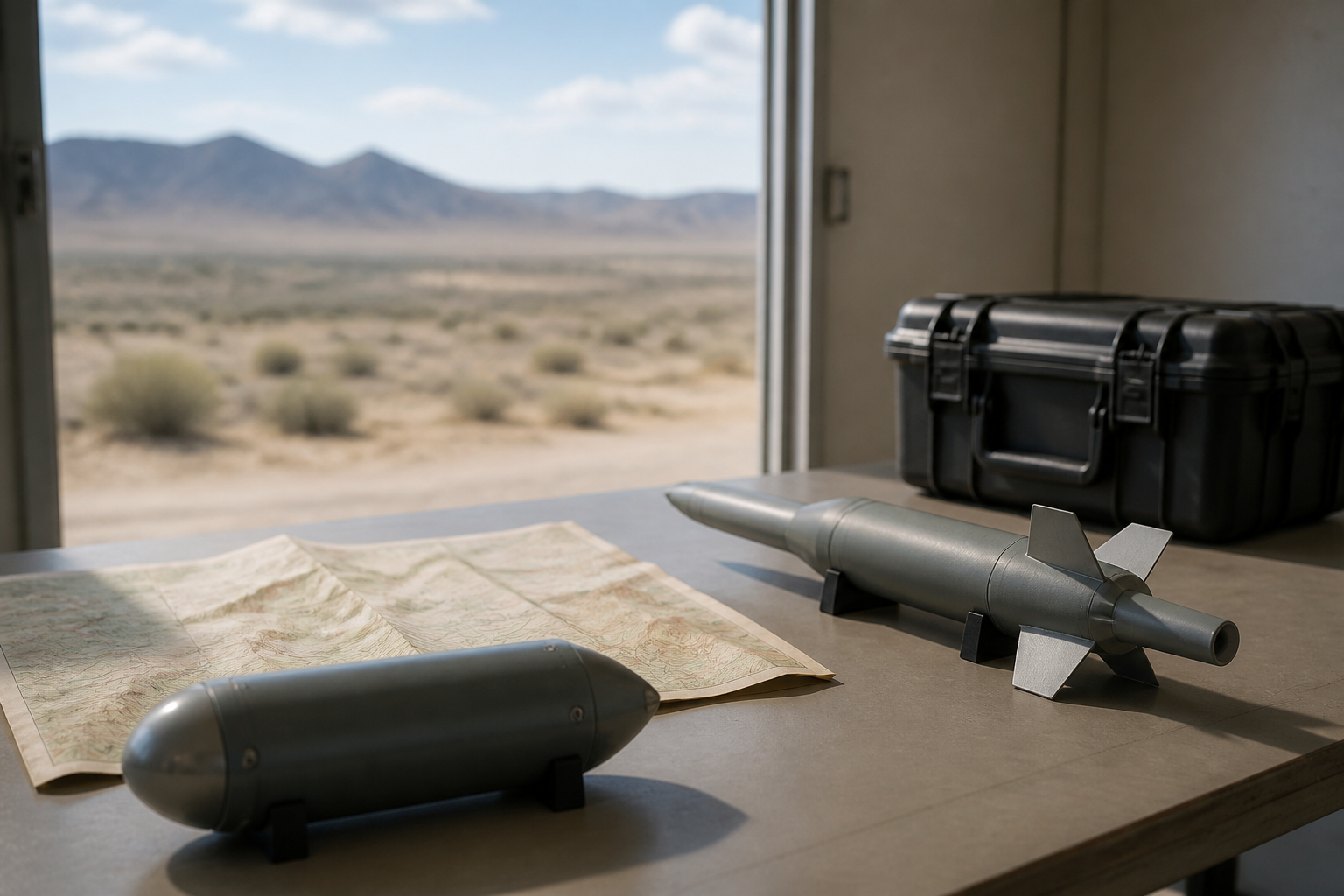
In short: Smart weapons do not hit by magic. They trade a far higher unit price for a far smaller miss distance, which cuts the number of rounds needed per target and shrinks the damage around it. The guidance type, whether GPS/INS, laser, or electro-optical, sets the accuracy, the cost, and how easily the weapon is jammed or blinded.
The common belief is that a “smart” bomb always lands on the crosshair. It does not. A guided weapon narrows the spread of where rounds fall, and that spread still depends on the seeker, the weather, and whether someone is jamming the signal.
קראו גם: The missile does not care about the target. The launcher decides everything · Why interception, not thicker armor, keeps armored vehicles alive · Keep Your Car Battery Alive Longer: A Practical Maintenance Guide
What the guidance actually does
GPS/INS munitions steer to a set of coordinates. The GPS receiver fixes position while an inertial unit keeps flying when the signal drops, so a JDAM kit turns a plain bomb into a coordinate-seeking one. Laser-guided weapons ride a beam that a soldier or aircraft holds on the target, which lets them kill a moving car but needs a clear line of sight. Electro-optical and infrared seekers match a stored image or a heat signature, so a preloaded picture lets the weapon find the aimpoint by itself. Israel’s SPICE family uses that scene-matching approach to strike accurately with no GPS at all.
CEP: the number that matters
Accuracy is measured by circular error probable, the radius within which half the rounds land. Unguided artillery at range carries a CEP near 100 to 300 meters. A GPS-guided bomb pulls that to roughly 5 meters, and laser guidance can reach 1 meter against a lit target. Jam the GPS and the same bomb falls back to inertial-only accuracy around 30 meters. Every precision-guided munition lives or dies on that single figure.
Fewer rounds, less rubble
The Thanh Hoa bridge in Vietnam survived more than 800 sorties with dumb bombs across seven years. In 1972 a small flight carrying laser-guided Paveways dropped a span in one raid. That is the real payoff. One accurate weapon replaces dozens of inaccurate ones, so fewer aircraft fly into danger and fewer bombs miss into homes nearby. What precision buys is concrete:
- Fewer sorties and fewer weapons to destroy a single target.
- Less collateral damage in built-up areas.
- Standoff range, so the aircraft releases outside short-range defenses.
- Confidence to strike close to friendly troops.
- A hit at night or through cloud when the seeker suits the weather.
The same precision logic now drives active systems for protecting armored vehicles, hitting an incoming round in flight before it reaches the hull.
The cost tradeoff
A dumb bomb costs a few thousand dollars. A JDAM guidance kit adds about 25,000. A cruise missile runs past a million. Against a wide troop formation or an open area target, cheap unguided rounds can still be the rational buy, because you are not paying for a precision you do not need. The same math governs defensive fire, where surface-to-air missiles spend one expensive interceptor to stop a single aircraft.
Before you call a weapon smart, ask for its CEP under active jamming and its unit cost. If the target is a point in contested airspace, buy the seeker; if it is an open field, save the money and drop iron.
מאמרים נוספים שיעניינו אתכם
- The missile does not care about the target. The launcher decides everything
- Why interception, not thicker armor, keeps armored vehicles alive
- Keep Your Car Battery Alive Longer: A Practical Maintenance Guide
- Protecting Armored Vehicles
- Israel’s Iron Dome – A missile killing war machine
- A Brief Introduction to Surface to Air Missiles